
niche bucketlist #9
Providencia, Colombia

Welcome to the niche bucketlist series, where I explore an obscure destination I’ve been obsessed with and take you along for the research. The goal here is to learn about less-known yet fascinating places around the world and plan out realistic ways to visit them. The niche bucketlist is a weekly newsletter featuring a new destination every Sunday.
It’s now also open for submissions! If you’d like to suggest a cool destination or contribute an entry as a guest writer, send me a DM or an email!
Today marks the first time in the series when I talk about a place I have actually already visited. The island of Providencia is very special to me, and as much as I want to gatekeep this secret Caribbean paradise, I do feel like it deserves an entry.
I don’t remember how exactly I learned about this island’s existence, but it honestly may have been on 90 Day Fiancé. Regardless, as I’ve been finding myself in Colombia quite often lately, ending up in Providencia was basically inevitable. Remote tropical islands are my all-time favorite places to be.
As I already went into detail in one of the previous niche bucketlist entries, I’d built up this almost cartoonishly idealized version of the Caribbean in my head when I was younger and Providencia was the first place that ever matched it. Something about the air, the sea, the scenery, and the overall atmosphere just made me feel like I was in my childhood dream.


And to top it off, I left the island engaged (not to a 90 Day Fiancé contestant, sadly), so this little detail probably added a rose-tinted filter to everything as well.
what & where
Providencia (the official Spanish name of the island), or Old Providence (the historical name preferred by the locals), is part of the San Andrés y Providencia archipelago in the Caribbean.
Despite being physically closer to the coast of Nicaragua, the archipelago officially belongs to Colombia and makes up a Colombian department of the same name. It consists of three inhabited islands: the largest and most popular San Andrés, the smaller and more remote Providencia, and a small islet called Santa Catalina connected to Providencia by a footbridge.
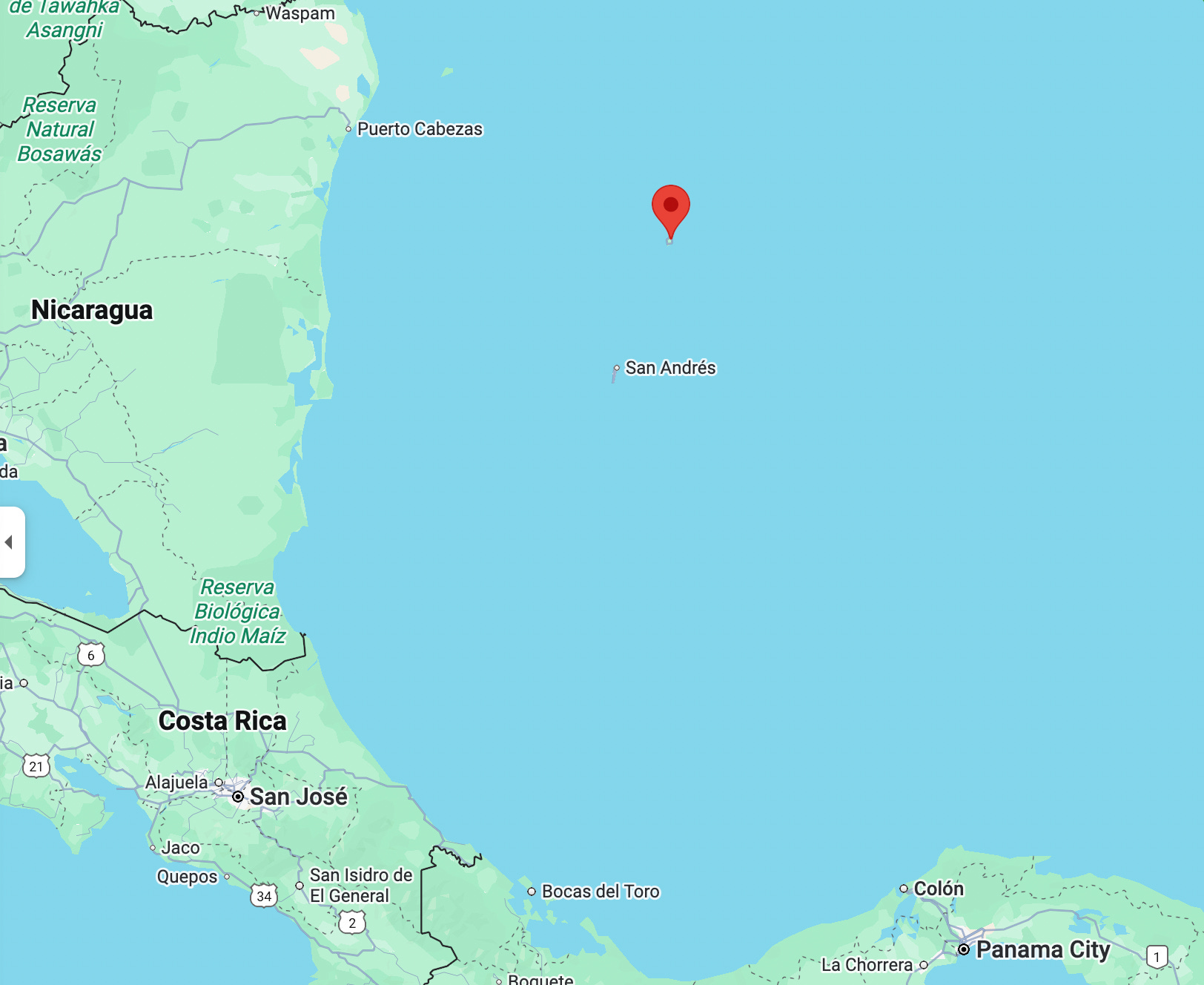
San Andrés, the larger, most populated, and most developed island, is a very popular tourist destination among Colombians. And don’t get me wrong, it’s a cool place, though quite the opposite of niche. But perhaps thanks to the magnetic pull of San Andrés, only a handful of people venture further and make it to its island neighbor.
As a result, they miss out on the best part.
why visit?
diving
I’m not going to lie—most other visitors we met in Providencia were fellow divers who, like us, came to the island to dive with sharks. Providencia offers the best diving experience in the entire country, better than San Andrés and leagues ahead of anywhere in mainland Colombia. Minimal currents, excellent visibility, and an abundance of resident reef sharks await below the sea of seven colors.
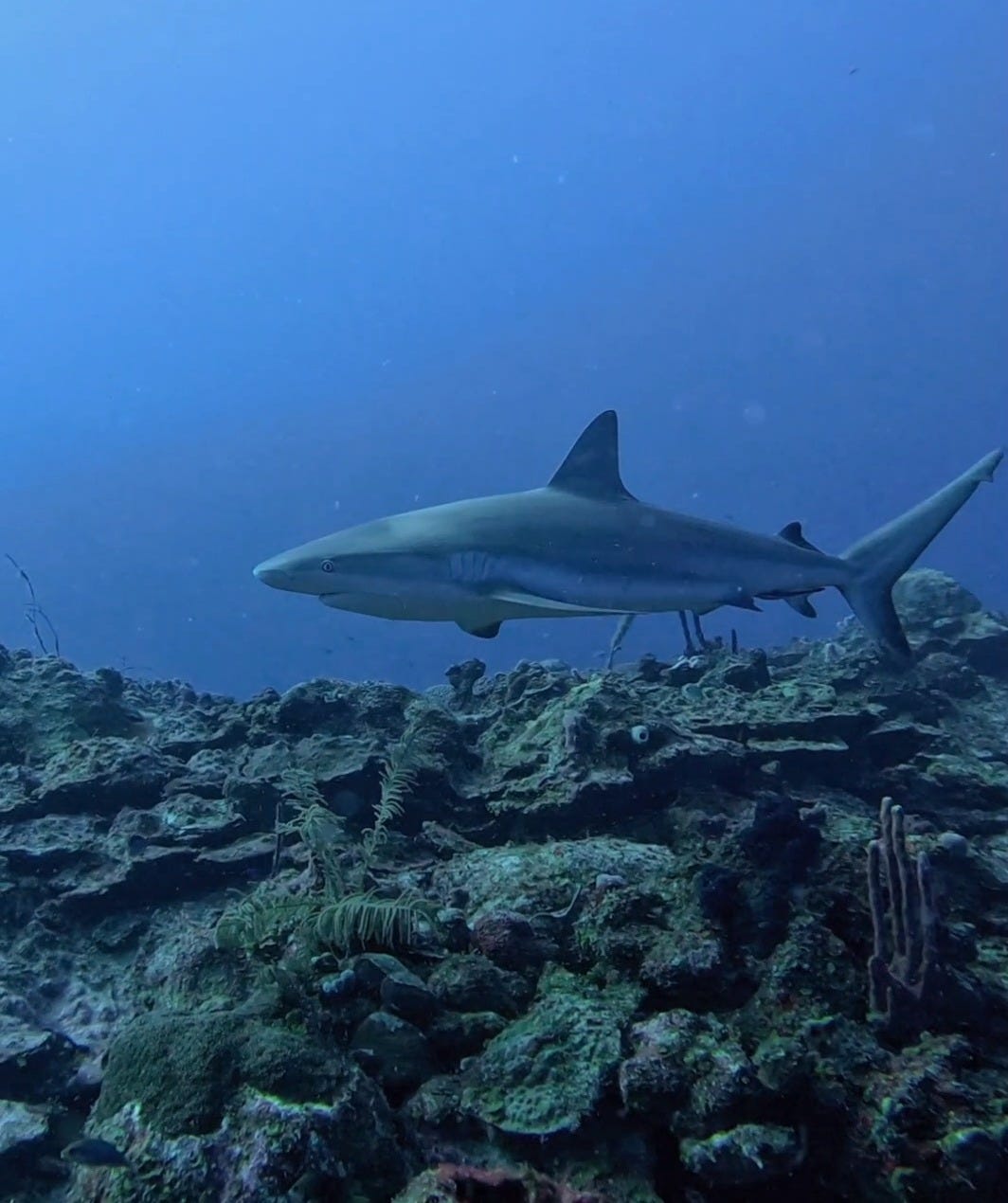
However, you don’t have to dive 30 meters deep to enjoy the marine life. There’s plenty to see with just a snorkel—yes, even sharks! Providencia lies in the Seaflower marine protected area and is home to the third longest barrier reef system in the world.
immaculate vibe
If you ever wonder what the antithesis of Bali looks like, this is it. Providencia doesn’t sell paradise, healing, or perfection. Everything on the island feels local, community-based, lowkey. There are no resorts, no backpacker scene to speak of, only one “real” hotel, and most available accommodations are posadas—locally run guesthouses in someone’s backyard. Grocery stores are small and stocked with what people need instead of crappy souvenirs. Everything has a practical purpose rather than a performative one.


Despite its striking beauty, Providencia hasn’t yet been overtaken by tourists. That’s a remarkable achievement, considering that tourism is the island’s main industry and many livelihoods depend on it. I can only hope this delicate balance will be preserved going forward.
unique culture
Culturally, the archipelago is vastly different from mainland Colombia, and the life on the islands is more similar to places like Jamaica than to Medellín. The Raizal people inhabiting the islands speak English-based creole instead of Spanish, and don’t really identify themselves as Colombians as much as just islanders. This difference is easy to miss in San Andrés thanks to the sheer number of vacationing mainlanders, but you can really feel it in Providencia.
The Raizal are not considered indigenous to the archipelago, which was previously uninhabited. Instead, their identity emerged from the blending of the many groups who passed through the islands—European sailors and settlers, enslaved Africans, and seafaring indigenous peoples from across the Caribbean.
The islands also have strong historical ties to pirate history. Captain Henry Morgan, among others, is said to have frequented Old Providence, and the pirates are remembered in children’s playgrounds and in geographical names alike.
the challenges
Providencia is quiet because it’s remote, but that’s only one side of the story. In 2020, as much as 98% of the island’s infrastructure was damaged by Hurricane Iota, which took four lives and caused an unprecedented amount of destruction. The situation was even more complicated due to everything happening in the midst of the pandemic.
The island was then closed for two years while the local population focused on rebuilding.
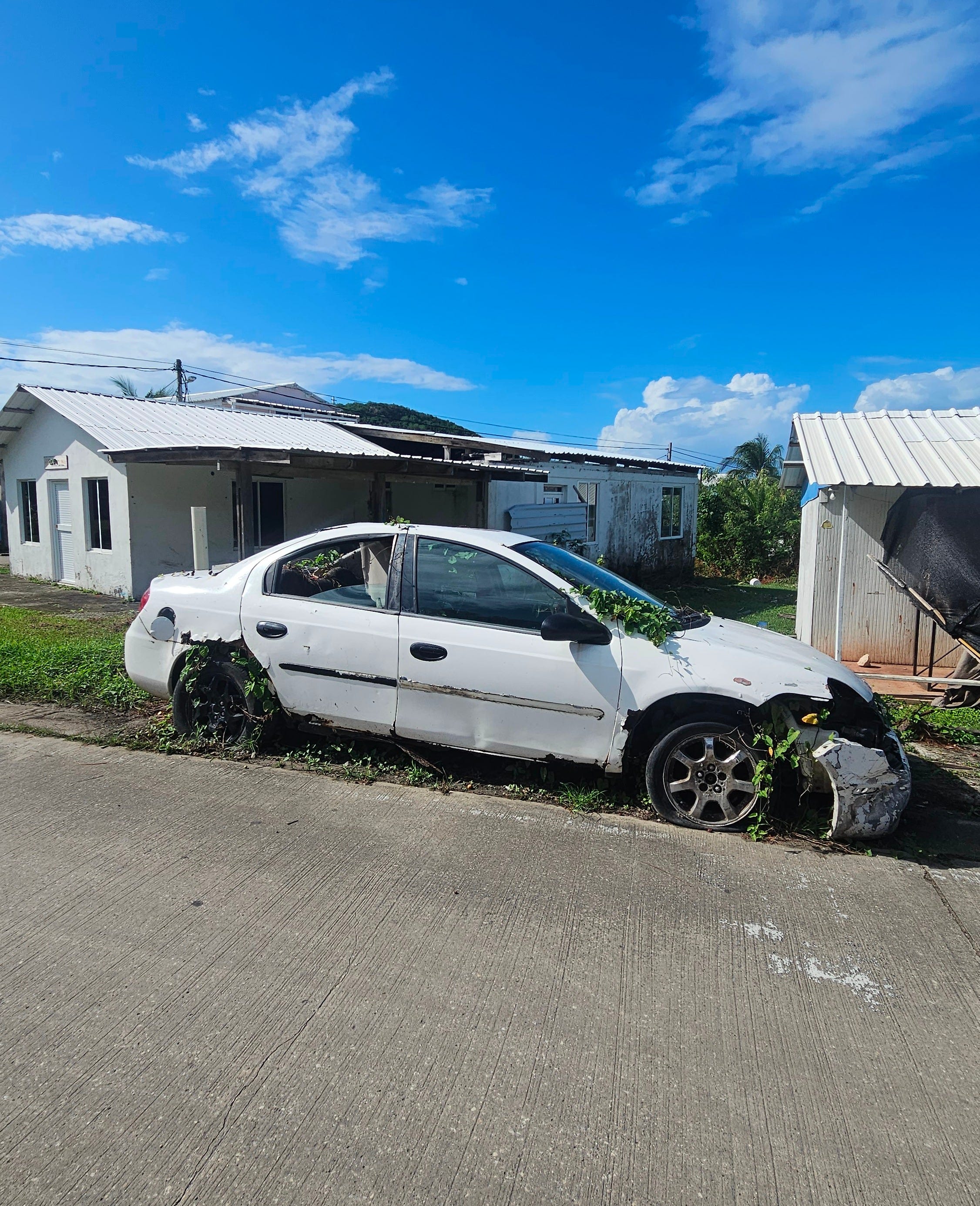
When we visited in 2024, we were impressed by how much had clearly been rebuilt and how well maintained the island was in general. But if you’re paying attention, the damage inflicted by the hurricane can still be seen everywhere. Ruins of people’s former homes hidden behind their new colorful houses, wrecked cars rusting along the main road, or signs with letters still missing serve as a constant reminder that recovering from a natural disaster of such magnitude doesn’t happen overnight. The struggle is clearly still ongoing.
The destruction wasn’t limited to land either. The coral reefs and marine ecosystems also suffered from the catastrophe. For example, the formerly popular mangrove forests saved lives during the storm but were mostly destroyed in the process. There are currently conservation and restoration projects going on for both mangroves and corals.
how to get there & around
The island of Providencia is tiny, so the airport it operates is equally small, and it currently only receives flights from the neighboring island of San Andrés operated by Satena Airlines.
As of 2025, these 20-minute flights are the only way of getting to the island. Online, you can sometimes find mentions of a passenger ferry, but it hasn’t been operating for the last couple of years. If this ever changes, I’ll update this article.
The Satena flight also doesn’t show up on Skyscanner or Google flights—you need to search and book directly on the Satena website or visit a kiosk in person.
Getting to San Andrés is significantly easier, as there are frequent flights from all major Colombian cities, as well as the occasional international direct flight from Panama City.
Once on the island, your transportation options will also be quite limited. There are a few taxis that will get you to your accommodation, and to get around, you can either rent a scooter (at your own risk—you won’t be getting a helmet, and after a few ugly accidents, the locals are quite careful about renting scooters), or you can go the safer route and rent a golf cart.
If you need to get somewhere specific, your best bet is probably to schedule a tuk-tuk ride.
what else to know
To be able to enter San Andrés, you’ll need to purchase a tourist card (tarjeta de turismo). You can typically buy it at the airport before boarding your flight to the islands.
The only thing I absolutely hated about staying in Providencia were the ever present mosquitos and sandflies. A good repellent is a must but even then it may not be enough.
Satena uses very small planes for the San Andrés-Providencia flight, and all your luggage must fit the size and weight requirements perfectly, or else you pay. They are very strict about it.
There is a strong informal horse racing culture in Providencia, with beach horse races happening on Saturdays. Also, a traditional music instrument from the islands is made from a horse skull.
The islands are protected to the point that you can only stay for a limited period of time per year, even if you’re Colombian. The only way to move there permanently is to invest a lot of money into the community or to marry an islander.
In case you missed our last niche bucketlist destination, check it out below ⬇️

All unpacked content is free, and I’d like to keep it that way. If you enjoyed reading this post, here are a few things you can do to support me & my work. Give the post a like ❤️ (even if you don’t have a Substack account), share ↪️ it with a friend or on your social media, or buy me a matcha 🍵 to keep the newsletter going.
Thank you for being here xx
fialka
Sounds and looks absolutely incredible!!! Also so lovely to hear you got engaged in a place so meaningful and personal to both of you 🥹 what a stunning spot!
Ahhh the delicate balance between tourism fueling the economy without it overrunning the entire island - what a dream! This looks so beautiful and any place that’s the antithesis of Bali I can imagine having immaculate vibes lol 🤌🌟🌟🌟