
niche bucketlist #10
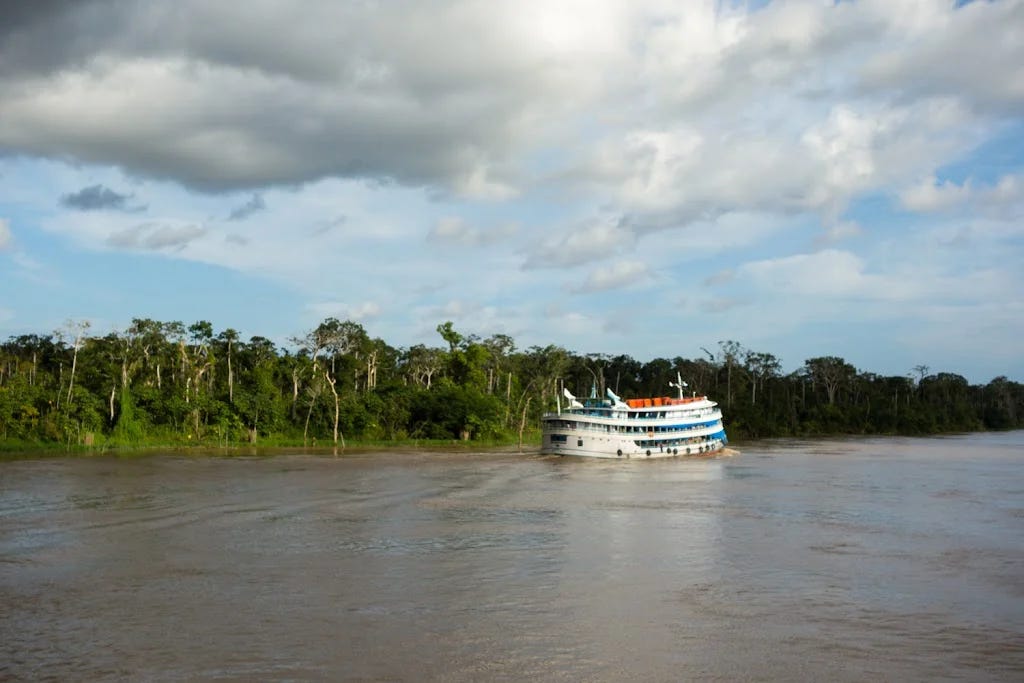
Amazon slow boat

Welcome to the niche bucketlist series, where I explore an obscure destination I’ve been obsessed with and take you along for the research. The goal here is to learn about less-known yet fascinating places around the world and plan out realistic ways to visit them. The niche bucketlist is a weekly newsletter featuring a new destination every Sunday.
It’s now also open for submissions! If you’d like to suggest a cool destination or contribute an entry as a guest writer, send me a DM or an email!
It’s no secret that I enjoyed my brief trip to the Amazon rainforest very much. During my visit, I found myself completely fascinated by the scenery, the fauna, the intricate ways people survive and thrive in the region, the colorful folklore, and everything in between. I praise it at any chance I get and I’m ready to go back and explore some more—hopefully soon.
Despite that, compared to the two people I went with — my fiancé and my sister — I was probably still the least enthusiastic Amazon fan. I was into it, but the other two were really into it. The idea for this niche bucketlist entry was therefore stolen from my sister, who hasn’t shut up about yearning for this particular experience ever since we learned it existed.
Kiki, if you’re reading this, I did all the research for you, all you have to do is book a flight now. The things we do for family and Substack readers, am I right?
what & where
We all hopefully know what the Amazon river is and where but just in case, the Amazon is the world’s largest river (by discharge and possibly by length as well), that flows from the Peruvian Andes to Brazil, where it ultimately empties into the Atlantic Ocean.
Thanks to the sheer volume of water this river carries, most of it is also easily navigable, so it serves as the largest, most important “water highway” in a region where roads are rare. That means you can fairly easily traverse the Amazon rainforest from Peru all the way to the Atlantic coast of Brazil by boat. Specifically, a network of local slow ferry boats that transport people and cargo across the jungle.
One of the most convenient starting points for this journey is the town of Iquitos in Peru. From there, you continue to the triple border region, where you disembark in Santa Rosa. After officially exiting Peru and entering Brazil in Tabatinga, you can continue cruising through the country to the largest Amazonian city of Manaus, then to Santarém, until eventually reaching Belém, where the river meets the ocean and the journey therefore ends.
why do this?
true adventure
This experience is not a cruise, quite the opposite. It’s low cost, it’s local, and it’s not by any means glamorous. You’ll sleep in a hammock (which you have to bring and hang yourself) among dozens of local passengers, enjoy questionable hygiene on the boat, eat whatever basic food is available, and hope for the best.
There are very few tourist extras, as this route is for those who have more time than money. If you just need to get from point A to point B, catch a flight. If you’d like to become part of the Amazon for a brief moment, take the boat.
digital detox
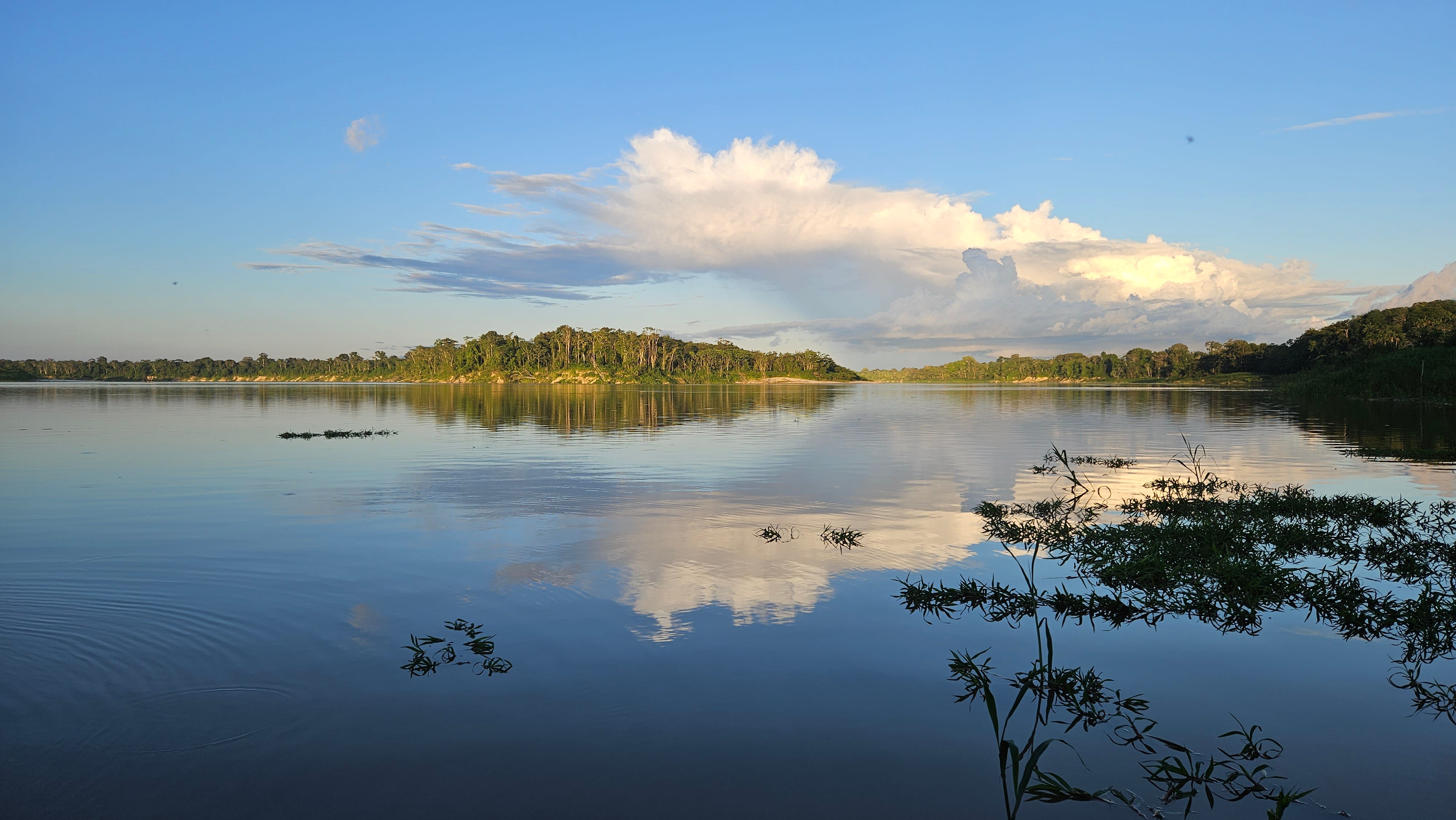
For most of this journey, you’ll be completely offline, with the river, other passengers, and your own thoughts becoming your only form of distraction. You should definitely bring a book or two to avoid going completely insane, but even then, boredom will likely still find its way in.
In a world full of a constant supply of entertainment, this is an amazing opportunity to log off and allow yourself to become bored with the coolest backdrop ever.
views for days
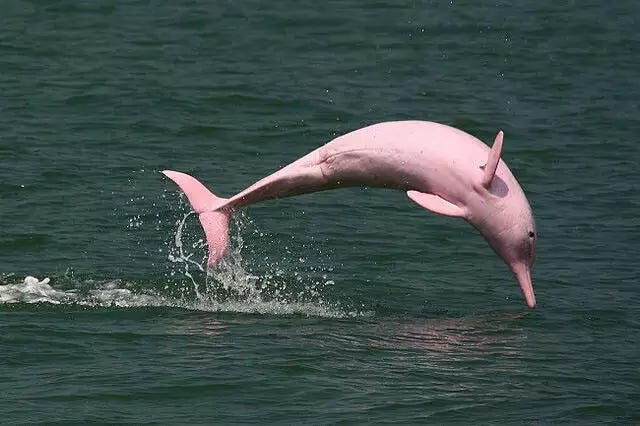
The reason people embark on this journey in the first place is, of course, the scenery itself. The boat goes through the rainforest, treating passengers to spectacular jungle views. Think wildlife, local towns and communities, natural phenomena like “Meeting of the Waters” (when two rivers of different densities collide and fail to mix for some time), pink and purple sunsets, and a brief insight into what daily life looks like in this fascinating part of the world.
how to get there & around
There are endless combinations and possibilities of securing this experience, as it’s not a single cruise but rather multiple different regional boats stopping in several towns on the way. It’s common to only take the slow boat for one section of the trip, so feel free to pick one that fits into your schedule.
The entire route can also be done upstream in the opposite order, which is exactly the same except it adds some additional travel time.
And of course, one should budget in even more time to account for delays, schedule changes, and to explore each of the stop towns and their surroundings.
To go from Peru to the Atlantic, these are the sections you can do on a single boat without transferring.
Iquitos - Santa Rosa (3–4 days travel time)
This section can also be done on a speedboat in 10-15 hours, but it’s not going to be a scenic ride like on the slow boat
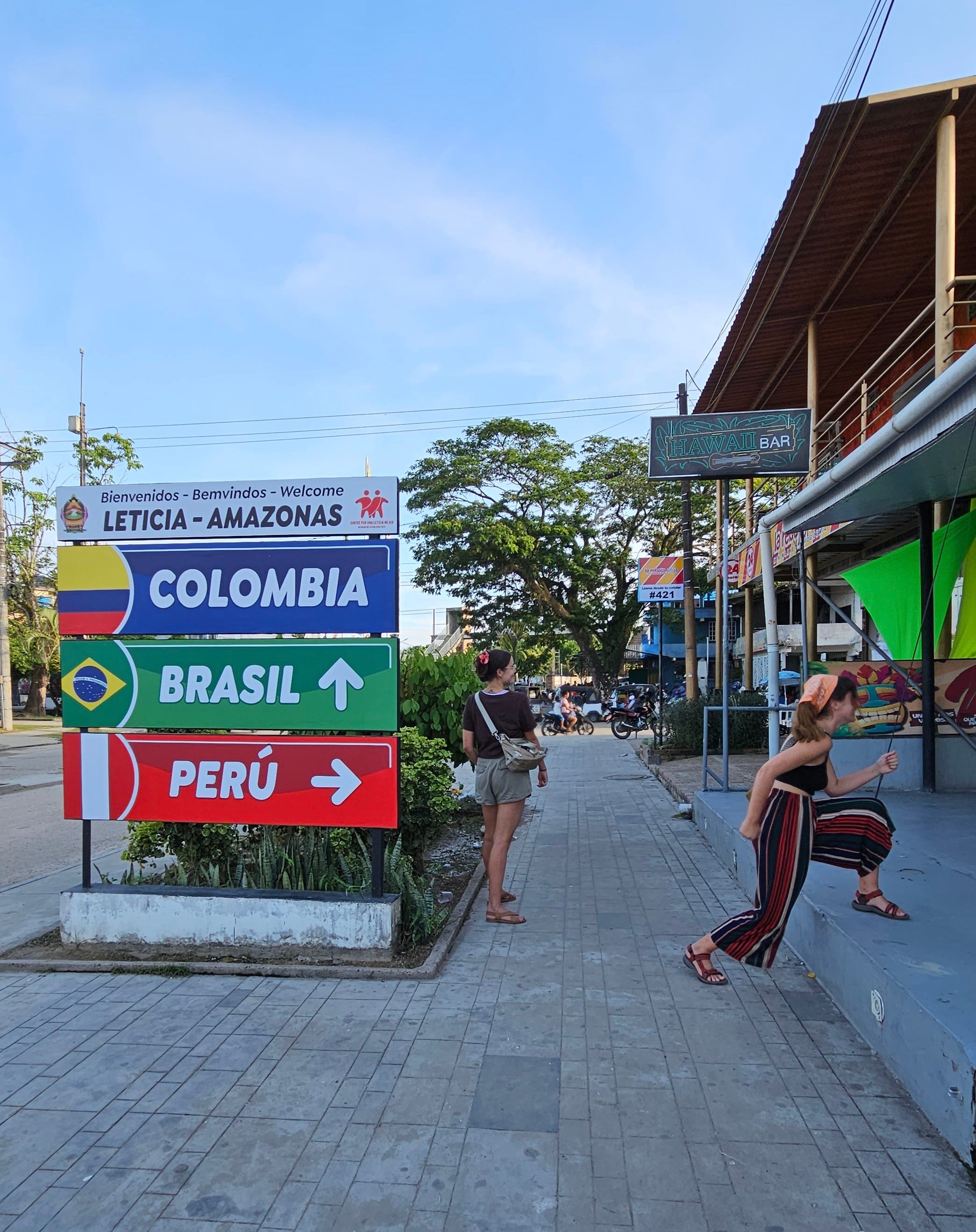
Since the boat drops you off on the Peruvian side of the Peru–Colombia–Brazil triple border, you’ll need to cross over to the Colombia/Brazil side to continue
Your next boat leaves from Tabatinga in Brazil, so you need to get stamped out of Peru and into Brazil before sailing onwards. For the purpose of this journey, you don’t need to go through Colombian passport control at all, even if you technically enter the country.
Highlights: crossing freely between Peru, Colombia, and Brazil
Tabatinga - Manaus (3-5 days)
The longest and most remote stretch of the journey
In this section, the boat goes through sparsely populated deep jungle and passes multiple designated indigenous territories.
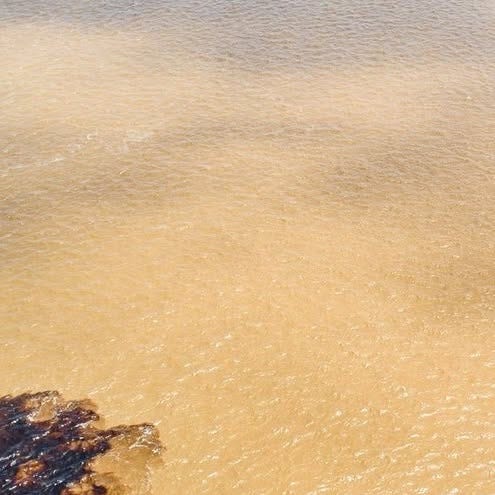
Highlights: the famous Meeting of the Waters before Manaus
Manaus - Santarém (1.5–3 days)
This section is more densely populated than the previous two—you will see villages and communities, and likely will come into contact with some of the locals who approach the ferry in their small boats to sell stuff to passengers
You can skip Santarém and go from Manaus straight to Belém, but then you’ll miss the highlight →
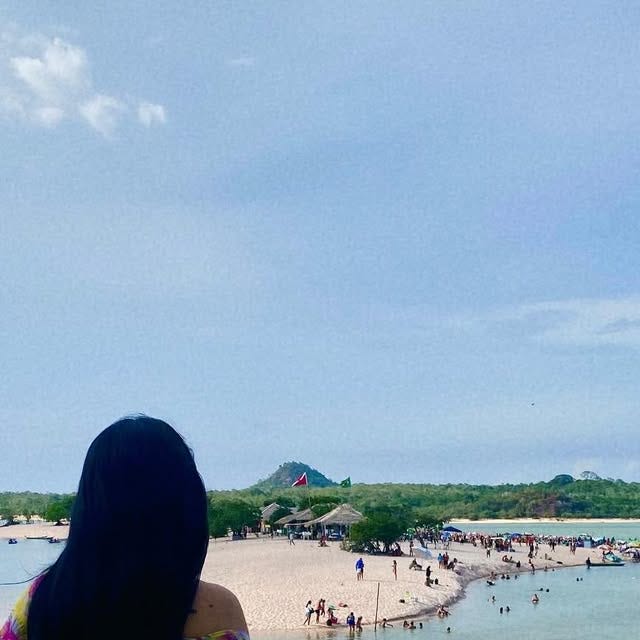
Highlights: popular “Caribbean of the Amazon” beach town called Alter do Chão
Santarém - Belém (1–2 days)
Final stretch of the journey through the river delta
Highlights: navigating small channels of the river before reaching Belém
Time is an abstract concept in the Amazon, and the estimated travel times for each leg vary a lot. Once you factor in that boats don’t leave every day, may wait until they’re full before departing, and allow time to explore the port towns or even squeeze in a jungle lodge stay (you’re in the Amazon, after all), you can easily spend a whole month en route.
That said, most people only choose one section of the river to travel by slow boat. Each of the port towns also has an airport, so you can fly in and out to save time.
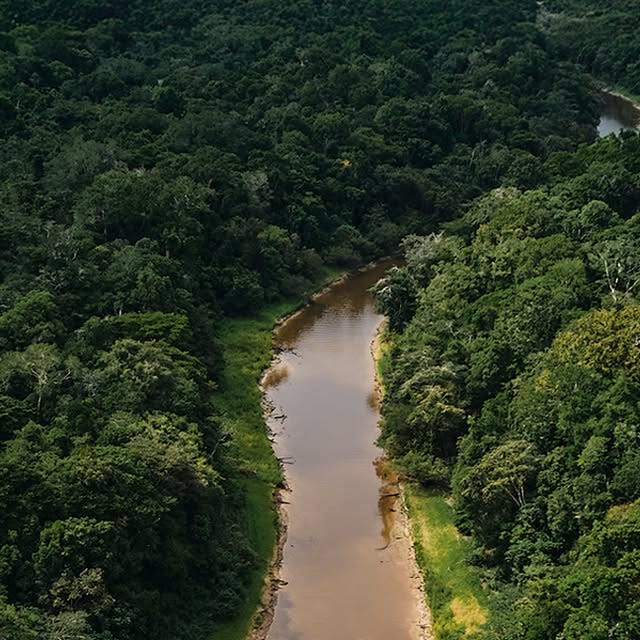
On the other hand, if you have all the time in the world, you can add even more adventure by extending your trip beyond Iquitos and to some of the Amazon tributary rivers in Peru or Ecuador.
The Peruvian route includes travelling from Yurimaguas through Pucallpa to Iquitos (or vice versa). Both Yurimaguas and Pucallpa also have road access, making them easier to reach from other parts of the country.
The Ecuador route starts in Puerto Francisco de Orellana (also known as El Coca) and follows the Rio Napo river until it flows into the Amazon, again, near Iquitos in Peru. There is no passenger slow boat on Rio Napo, but the journey can be done on a series of speedboats.
Both of these extensions will likely be even less comfortable and more intense.
what else to know
Apparently, the individual boats differ vastly in cleanliness and quality of amenities. If you aren’t in a rush, you can plan your trip around sailing on a boat with a good reputation.
If you’re not keen on sleeping in the hammock public space, most boats also offer private cabins. However, these book out fast and can sometimes be a bit claustrophobia-inducing.
The boats rarely leave on time—keep your schedule flexible
To travel the Amazon, you might need to get vaccinated against yellow fever. The vaccine is generally free through public health systems in Peru, Colombia, and Brazil, even for foreigners.
This isn’t a dangerous journey, but general Latin America travel safety precautions still apply. Don’t bring anything you can’t afford to lose.
In case you missed our last niche bucketlist destination, check it out below ⬇️

All unpacked content is free, and I’d like to keep it that way. If you enjoyed reading this post, here are a few things you can do to support me & my work. Give the post a like ❤️ (even if you don’t have a Substack account), share ↪️ it with a friend or on your social media, or buy me a matcha 🍵 to keep the newsletter going.
Thank you for being here xx
fialka
Que vivan las Amazonas!
Wow I’ve never heard of this journey! It’s making me want to cancel a few months of my life and embark on the entire thing 🤭