

love islander & the CCP
About two years ago, a wave of outrage swept through the Czech internet. It came to light that a well-known influencer and (then future) Love Island contestant Jan Michálek had been paid to visit China and take part in what was condemned by our media as Chinese propaganda.
Michálek didn’t particularly try to keep it a secret that his trip was sponsored. Why would he? It’s not uncommon for tourism boards to invite influencers to boost international interest. Except he actually posted very little about his travels through China. Instead, he was being followed by a Chinese film crew, which, in his words, was “filming for Chinese media, probably for Czechs, or Chinese people learning Czech, or something like that; I don’t really know, but it was awesome.”
After he visited Xinjiang, a province apparently1 infamous for the human rights violations against its native Uyghur population, Czech sinologists and other experts called the mindless promotion of the province as a tourist destination a blatant attempt at distraction from the human rights crisis.
Once that cat was out of the bag, all hell broke loose online.
Czechs very vocally reject everything that stinks of "communism” or authoritarianism, so being a Chinese propagandist is no small offence here. Michálek claimed ignorance and naivety, and the consensus was that he simply sold out as a useful idiot. Another famous local YouTuber even made a video trying to “catch” other influencers by posing as a Chinese media company offering sponsored excursions and making the trip’s true purpose increasingly more obvious throughout the negotiation process.
It, of course, also went viral, even though I personally didn’t find it particularly revealing or interesting. What did surprise me was the selective outrage over China in a country that doesn’t seem too concerned about foreign influence when it comes from elsewhere. In fact, when members of the youth wings of several prominent Czech political parties went on a trip to Israel organized by the Israeli embassy earlier this year, it barely made the news.
megaprison as a viral content machine
More recently, I opened YouTube from a work laptop without signing into my account, and the virgin algorithm showed me a video titled The World's Highest Security Prison: CECOT (The most evil are kept here).
CECOT is, of course, the megaprison built in El Salvador by President Nayib Bukele in an effort to rid the country of gangs. It has since been made infamous for various reasons, from torture allegations to accepting deportees from Trump’s USA without trial.
Curious, I clicked.
The creator, who otherwise makes content like “COLDEST PLACE ON EARTH” or “VISITING THE MOST CROWDED ISLAND”, calls his videos documentaries and styles them as such. In his prison “documentary”, he tours the premises, examines the security systems, films the nutritionally poor meals prisoners get fed daily, and even gets shown around a harrowing solitary confinement cell. All that in the presence of dozens of tattooed convicts silently staring into the void behind bars as the camera rolls past them like they’re attractions to gawk at. He then interviews one prisoner while about 12 guards stand around “to keep him safe from this extremely dangerous man”. He asks the former gangster a few heavy-hitting questions, such as how many people he killed, and the video ends.
If I was unsure what exactly I was looking at, a glance at the comment section solved the mystery. “They always interview the same prisoner,” one commenter complained. That’s how I discovered that the CECOT tour is a lucrative content cow milked by many a YouTuber, and is likely facilitated by the government of El Salvador itself—although none of the creators ever admitted that part outright.
At the end of the day, it doesn’t matter if the Youtubers got money from Bukele; the “documentaries” have paid for themselves already. Each video has millions of views, despite all of them being literally the same tour, only with a different guy in front of the camera. One thing is for sure—the world’s highest security prison is not a place one can just pull up to and start filming.
A special government authorization is needed for that, which many actual journalists and human rights watch organizations have been denied in the past.
Most internet personalities with a CECOT video out there are decidedly not journalists or “documentarists”. They instead fall into the broad “travel vlogger” category of people who film themselves visiting interesting places, providing nothing besides entertainment to their viewers. Their job is never to investigate, ask difficult questions, or engage critically with what they’re filming, as taking a stance could alienate a portion of their massive audience or limit their future collaboration opportunities.
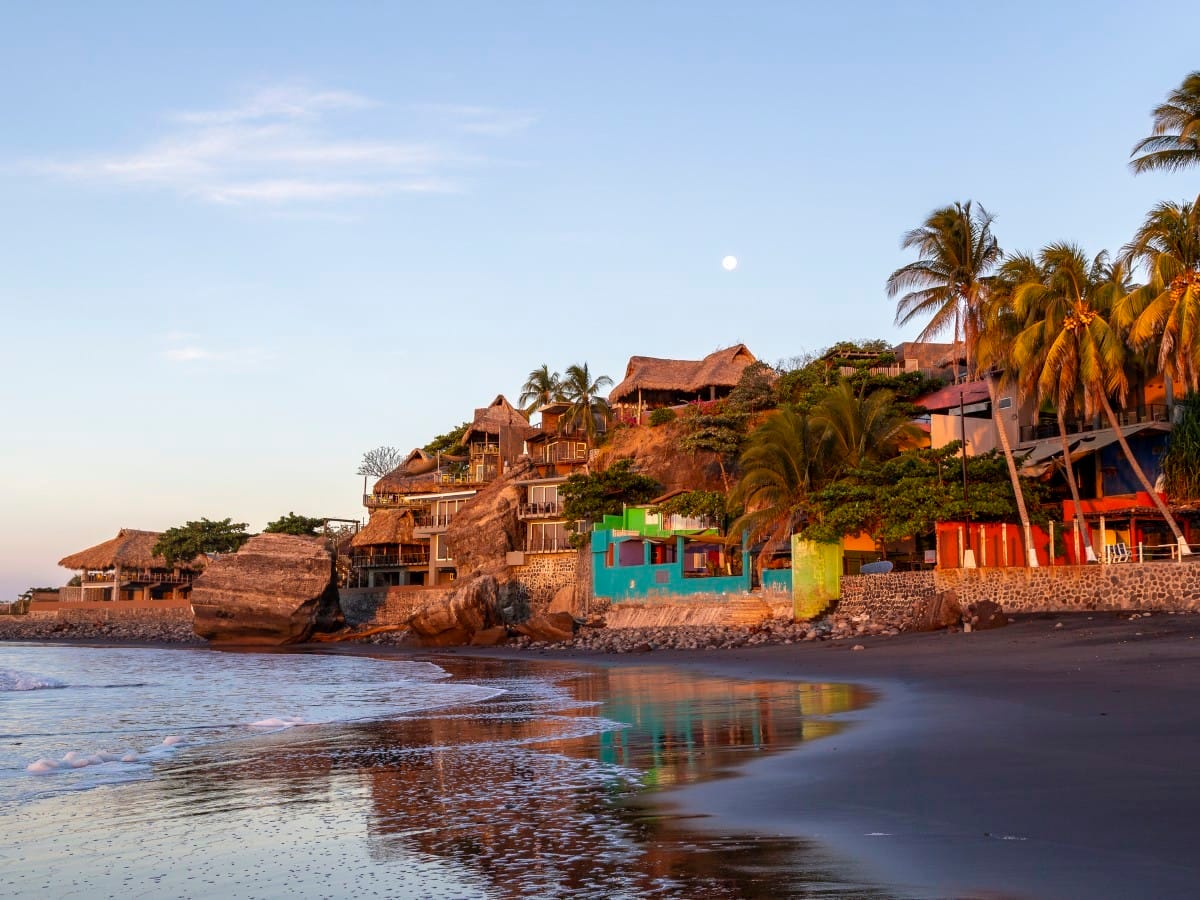
But a megaprison isn’t the Louvre; you can’t just travel to El Salvador and check it out to form your own opinion. These videos are part of a broader tourism campaign aimed at convincing curious foreign visitors that the country is safe to visit after years of being associated with extreme violence. The government wants El Salvador to become Central America’s new surfing hotspot, and what better way to sell that image than to showcase the place where all the gangsters have supposedly been locked away?
Never mind that tourist money will likely go right back to keeping the prison running and the man who built it in power.
travel is always political
It would be easy to dismiss all of this as a problem with influencers. But the absence of a sponsorship doesn't automatically make a trip morally neutral.
Too often, our line of questioning starts and ends with “is it safe to visit?”, without ever diving deeper into why it may be unsafe, and if, perhaps, our choices might fuel the very reason that safety question exists in the first place. We treat curiosity and wanting to form our own opinions as a good enough justification for going anywhere. But curiosity, however genuine, does not absolve us of the responsibility to consider the consequences of our presence.
The Yemeni island of Socotra, with its out-of-this-world scenery created by the unique flora and fauna found nowhere else on the planet, lives on many people’s “niche bucketlists”. It’s been popularized online as a “random” place to visit if you’re an adventurous off-the-beaten-path traveler not scared of setting foot in a war-torn country known mostly for its pirates.
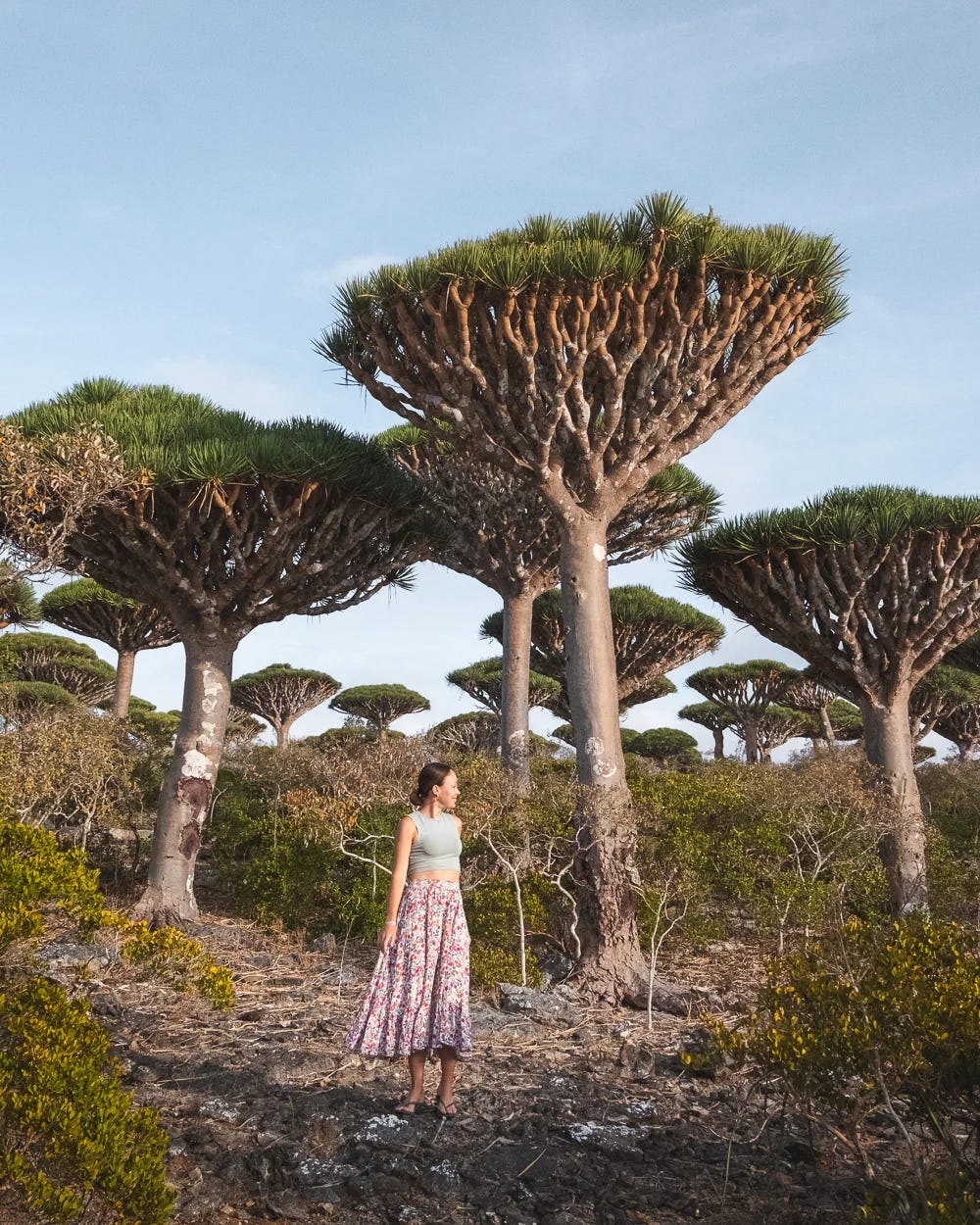
People will wonder about safety, and once they learn that Socotra is quite detached from mainland Yemen and barely touched by the country’s bloody conflict, they deem it good to go. It is even possible to avoid flying through mainland Yemen entirely, as there are direct flights from either the UAE or Saudi Arabia. Even better.
But why is it like that? That’s a can of worms many travelers interested in taking photos with cool alien-looking trees don’t dare to open.
I don’t believe it’s possible to visit a place like Socotra ethically in the current day. At the very least, I don’t agree with treating a country struggling with conflict as a quirky vacation destination. And that’s before we even get to the actual struggle, or the (already noticeable) environmental impact tourism has on Socotra’s fragile ecosystem.
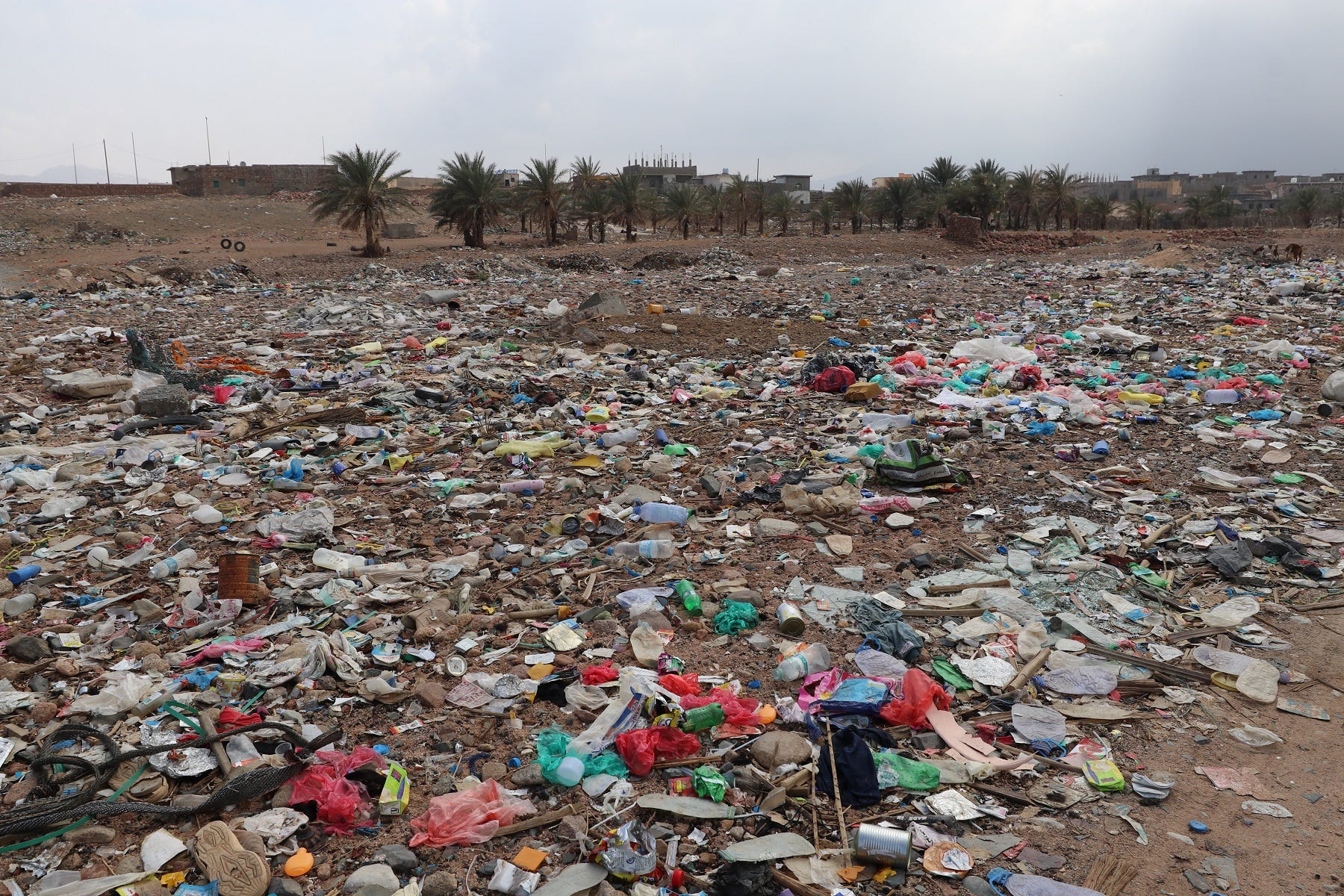
The “but I’m helping the local economy” rebuttal is weak, because which economy? One of a country so fractured it’s practically nonexistent? One of a foreign power treating the war as a puppet show to further its own interests? One of a terrorist group? How is going on an agency-facilitated tour that starts and ends in Jeddah and has you glamping around the “wild and unspoiled” island helping the people of Socotra exactly? Yes, a select few locals may earn money from your trip. But what are they going to buy? Stuff shipped from the mainland, where 67% of the population already depends on humanitarian aid?
so how do we get it right?
Most of us don’t have huge audiences or lots of authority to the point that we would be getting paid to sway public opinion on problematic countries worldwide.
But I would argue that we all have some amount of influence on the broader travel culture, and therefore also bear some responsibility for where we choose to go, as well as the story we decide to tell afterwards. Word of mouth is a powerful tool, and in a world where everyone is a micro-influencer in their own right, the choices we make become the ideas we promote.
Whether we like it or not, governments absolutely use tourism as a form of “soft power” to legitimize themselves on the world stage—that’s why they are so keen on paying influencers to promote them as viable vacation spots.
Saudi Arabia opened up for leisure tourism in 2019, but was already inviting influencers to rehabilitate its image in 2018—the same year Saudi women gained the right to drive cars. Taliban-run Afghanistan is the new up-and-coming destination advertising itself in the edgiest way imaginable, so who cares that Western tourists enjoy more rights than half of the country’s own population? A visit gives you the most insane bragging rights and is guaranteed to garner online interest.
I recommend watching this video describing Afghanistan’s tourism strategy.
There are some obvious candidates for boycott, but I am very well aware that only visiting countries with perfect politics is pretty damn impossible.
Many European powers still have colonies overseas territories and stay wealthy by continuously exploiting the colonies they were forced to give up.
Rwanda is branding itself as the “Switzerland of Africa” for tourism while allegedly sponsoring genocide in the DR Congo.
Indonesia’s West Papua is a beautiful place to dive, but also a subject of lengthy, bloody conflict rooted in racism and assimilation forced on the native Papuan population. But we don’t even have to go that far—Bali itself was carefully selected for tourism development to cover up mass killings.
In Colombia, tourism in certain regions sponsors guerrillas and paramilitaries terrorizing the local population.
I could go on and on and on. If a country is not currently involved in some kind of conflict, it’s likely terrible for minorities; if not, it has women’s rights issues, the rest hates the LGBTQ community; and Iceland kills whales. I’ve spent a lot of time thinking about a country with zero ethical problems, and if you know one, feel free to educate me.
All of the above may be beautiful places full of wonderful, kind people who are governed by corrupt, bloodthirsty individuals. So where is the line between a country that’s worth a visit because the government doesn’t represent the people as a whole, and one that those of us interested in ethical tourism should boycott entirely?
Nowhere is flawless, but at the end of the day, I do believe that choosing to vacation in a war-waging country, or one that is involved in funding and arming proxy wars, will inevitably make you a sponsor of war. I am also convinced that visiting a resource-depleted region means taking those resources away from the local population, even if you pay with shiny “tourist money”. And I do think that if a country makes it impossible to visit unless you’re going through government-controlled channels, then perhaps it is better not to bother visiting at all.
Those are my own standards. Yours are likely going to be slightly different and shaped by your identity, politics, lived experience, and a multitude of other factors. The only thing I ask of you is to not treat world travel as neutral and inconsequential. Don’t just ask “is it safe?” Ask who or what does your visit fund and promote, who benefits, and who suffers.
And once you have the answer, ask your conscience whether it is OK with it.
you might also enjoy →


Thanks for reading! If you enjoyed this post, here are a few things you can do to support me & my work. Give the article a like ❤️ , share ↪️ it with a friend or on your social media, or buy me a matcha 🍵 to keep the newsletter going.
You can also subscribe for free to my essays about ethical travel & online travel culture. Or become a paid subscriber and have access to the full range of unpacked content, including the upcoming Prague map.
Appreciate your support xx
I say apparently not because I don’t believe it’s happening—I just don’t think the average person knows about it. Like many other human rights violations and genocides around the world, this one simply doesn’t get that much press.
I sometimes go places that are highly 'controversial' in some way or another, and yes, I do think about it, and consider how my presence influences the situation. But it is always two worlds we are talking about: (1) the people you acutally meet, interact with, and hear stories from, and (2) the invisible forces that allowed you to enter and perhaps are taking some cut (visa fees, hotel taxes, etc) to perpetuate their evil deeds. Almost everywhere you go (except perhaps North Korea), you will find people interested in talking about their lives. To me, that is what is the most important thing. It outweighs my aversion to politics, even if I'm talking to someone who agrees with something their country is doing that I think is deeply flawed or ignorant. I think I am better off by hearing it, because it's not about agreement, but about at least understanding how places become what they are.
Great piece. I’ve lived in Bali for three years and only learned about the 1965–66 killings in the last one, through Indonesian-Chinese friends whose parents lived through those years elsewhere in the country.