
niche bucketlist #14
Tofo, Mozambique

Welcome to the niche bucketlist! This series started as me exploring obscure destinations I’ve been obsessed with and taking you along for the research but over time evolved into a collaborative project. We’re open for submissions! If you’d like to suggest a cool destination or contribute an entry as a guest writer, send me a DM or an email!
The goal here is, as always, to learn about less-known yet fascinating places around the world and plan out realistic ways to visit them.
My trip to Tofo was born out of a sudden opportunity rather than a previous obsession. One day, I went swimming with a friend who, between laps, told me about his upcoming trip to South Africa and Mozambique. Jokingly, I said that I wanted to come as well, to which he replied that they had a spare room in Tofo, so if I really wanted to join, I could. Hope he wasn’t just trying to be nice because I’m the kind of person who will say yes to opportunities like this one in a heartbeat.
A couple of months later, all this happened →

Up until that point, I had very little knowledge about the country. I knew that they speak Portuguese and that whale sharks live there; that was about it. Travel to Sub-Saharan Africa, especially somewhere other than Zanzibar, had always seemed unattainable for some reason that only ever existed in my head, and I am glad that this trip opened my eyes and mind to the possibility.
Getting to Mozambique might have created one of my most intense travel stories, but staying there was something else entirely. Two weeks in Tofo flew by in absolute bliss, and the sleepy beach village quickly became one of my favorite places I’ve ever visited.
And because Mozambique feels like one of those increasingly rare destinations where thoughtful tourism can genuinely make a positive difference, I’m more than happy to share the excitement with you.


what & where
Tofo Beach, or Praia do Tofo, or oftentimes just shortened to Tofo, is a small fishing-turned-tourist village in the Inhambane province in central Mozambique, which is a coastal country in southeastern Africa. Along with Vilankulos and the Bazaruto islands, Tofo is probably the most popular Mozambican spot to visit for leisure, making it perhaps not so niche if you’re already planning a trip to Mozambique.
But that’s the thing. Thanks to the difficult logistics and the almost non-existent marketing, few people go through the hassle of visiting Mozambique to begin with. And in my opinion, those people are missing out bigtime.
Tofo is quite remote, but it isn’t an “undiscovered hidden gem” by any means. It has dive centres, surf schools, restaurants, cafés, and somewhat functioning tourism infrastructure. Despite all that, it still feels somewhat rustic, like it has every predisposition to turn into another Canggu copy but for some reason keeps resisting, which is probably why I found my stay there so enjoyable.
why visit
diving & marine life
Diving in Tofo, we saw sharks, mantas, huge potato groupers, eels, and plenty of other fauna. The reefs seemed quite untouched and healthy, and my biggest problems were the somewhat poor visibility, currents, and my very personal beef with negative entry. A friend of mine got her PADI certifications in Tofo, and while it probably prepares you for anything, beware that it’s not the easiest place to learn.
If you’re an experienced diver, however, it is the perfect spot to get some dives in and expand your skills.
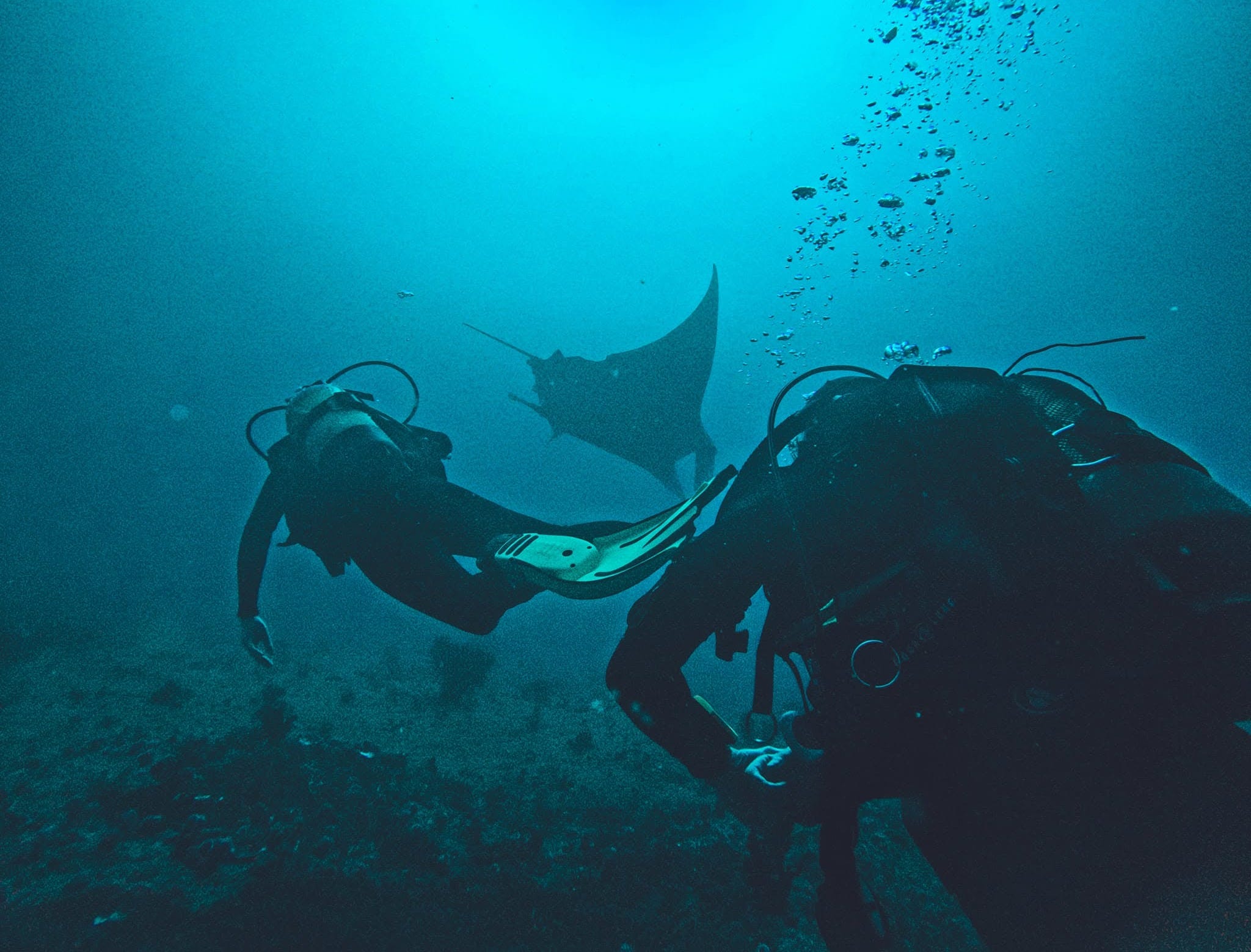
For those who don’t dive, there are also ocean safaris in Tofo, on which people can see dolphins, mantas, and, if they’re lucky, whale sharks. In the winter, you can also see migrating humpback whales along the coast. All of these sightings are 100% chance-based, making them a more ethical option compared to whale shark tours in some other countries.
We dove with Liquid Dive Adventures and I was very impressed by their professionalism, can only recommend!
surf
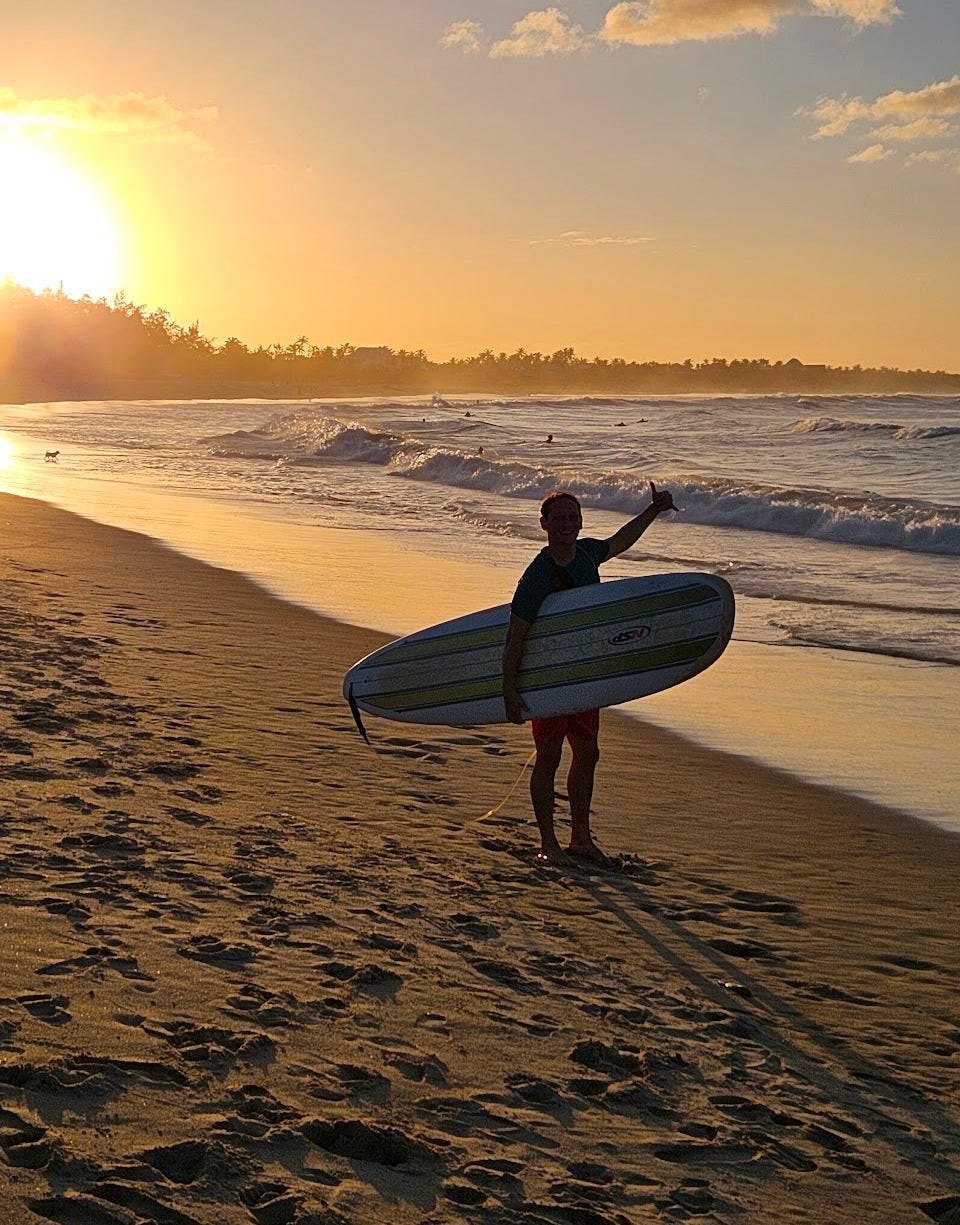
Tofo is a great place to surf for all skill levels. The main beach is perfect for learning, while the neighboring wild Tofinho is where the experienced surfers come to play.
We rented boards and took classes from the boys at Wutsita and had an amazing time with them.
eat seafood
The official e-Visa website (improved a lot since the last time I saw it btw!) tells you to eat delicious prawns when in Mozambique, and who am I to defy the government? Mozambican food is fish and seafood-heavy, which is always an immediate yes for me. There’s also an abundance of fresh fruit (I don’t even know how many passionfruits I ate daily), and several pretty good restaurant options for the foodies.


Banca Cadir for a hearty local lunch. Rio’s bakery for sourdough bread and the most addictive cinnamon rolls. Branko’s for tuna grill dinner.
slow beach life
We stayed put for two weeks in Tofo working remotely the whole time (same timezone as Prague, hello). And let me tell you, the life is slow-slow. Days started and finished early during the southern hemisphere winter, and consisted mostly of swimming, surfing, eating, diving, drinking 2M beers and doing random sidequests (such as going to Inhambane to take out cash and buy bus tickets, which took a whole damn day).
It was not the most eventful time, but definitely the kind of beach life that makes you forget about everything else going on in the world—just the way I like it.
how to get there & around
You see, that’s the problem.
Getting to Tofo is no easy task—take it from my story from hell. But chances are you will first need to travel to the capital, Maputo, either by plane or by bus from South Africa, as we did. That part is easy (as long as your visa comes through).
From Maputo onwards, however, it gets a bit trickier. Here are pretty much all the options you have:
1. chapa
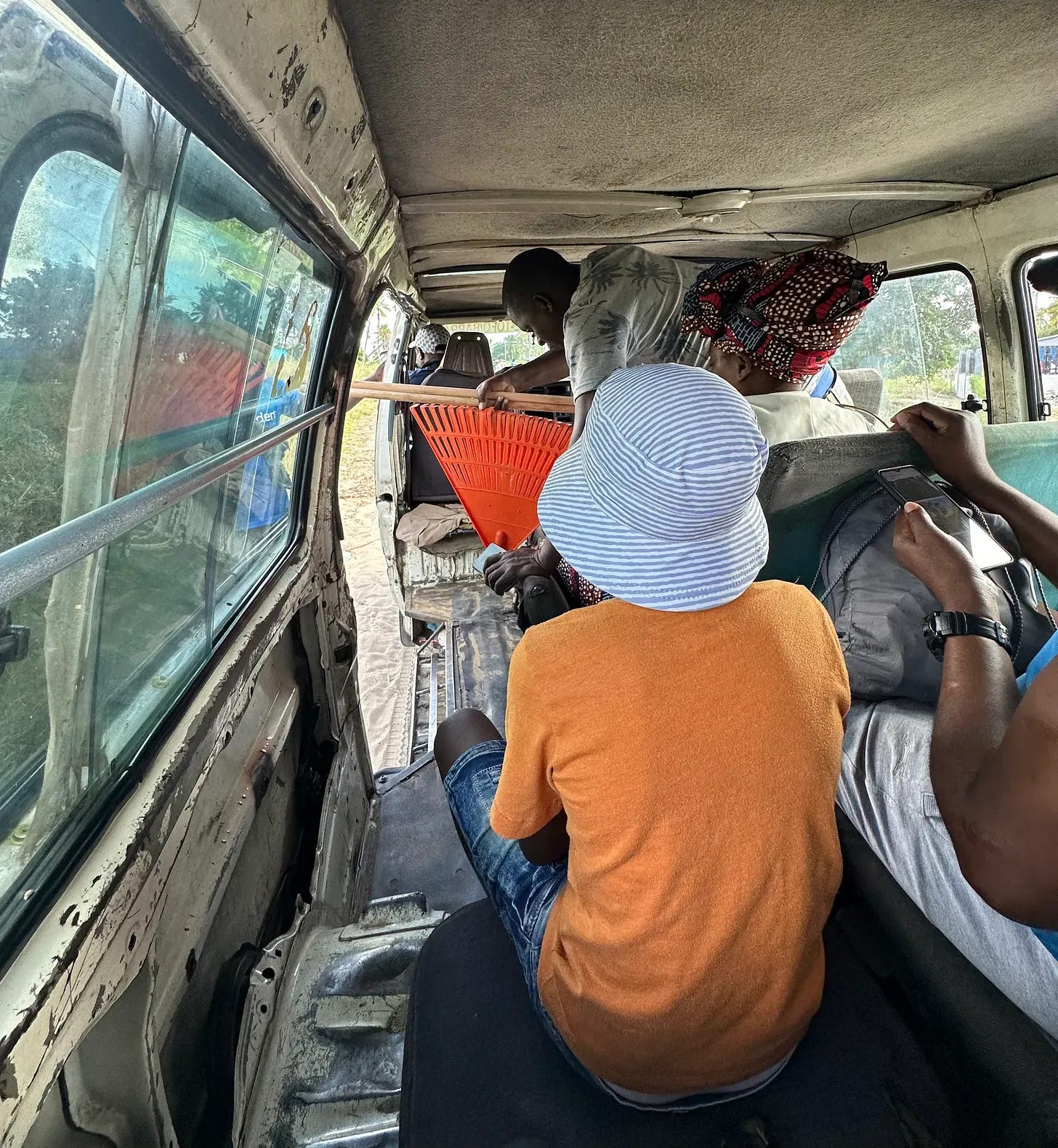
Chapas are privately owned vans and minibuses serving as inofficial public transport in all of Mozambique.
I don’t recommend. Refer to my road to Mozambique story to get this idea out of your head. You’re welcome.
If you, however, miss your bus or run into any problems on your way, you might have to use one anyway. Always double-check where each chapa is going, don’t pay in advance, learn how to pronounce your destination correctly, and hope for the best. Good luck!
2. Etrago
Maputo → Inhambane / Monday, Wednesday, Friday, Sunday 4:00
Inhambane → Maputo / Monday, Wednesday, Friday, Sunday 5:00
We used the Etrago bus on the way back from Tofo, and it is the cheapest, most reliable option. The downside is that it goes to Inhambane, meaning you still need to arrange private transport or catch a chapa between Inhambane and Tofo.
I’m also not sure whether the website accepts foreign cards these days, since in 2024 we had to go to the ticket office in person.
3. Cheetah Express
Tofo → Maputo / Tuesday, Friday 5:30
Maputo → Tofo / Monday, Thursday 6:30
This option is significantly more expensive but goes directly to Tofo. It also continues from Maputo to Nelspruit (Mbombela) in South Africa, and even offers an overnight package, making it a good backpacker choice.
Again, I don’t know if the online booking accepts foreign cards.
4. LAM flight
Inhambane has an airport, and according to Skyscanner, there are flights between Maputo and Inhambane every day—sometimes direct and sometimes with a transfer in Vilankulos.
This is by far the most expensive option, and not necessarily the most reliable one, as flights can often be cancelled on short notice. The joke is that LAM stands for “late and maybe”, which tells you everything you need.
5. Fatima’s shuttle
If you search online, you will see this option mentioned among backpackers. Fatima’s Place is the oldest backpacker hostel in Maputo, and they used to have a sister hostel, Fatima’s Nest, in Tofo. Fatima’s would arrange a “shuttle” between the two, but by many accounts, the shuttle was just a chapa.
However, Fatima’s Nest in Tofo seems to have permanently shut down as of 2026, and the one in Maputo doesn’t seem to be very active either. I am unsure whether it is still possible to arrange the shuttle, but either way, it was far from the best option in the current day.
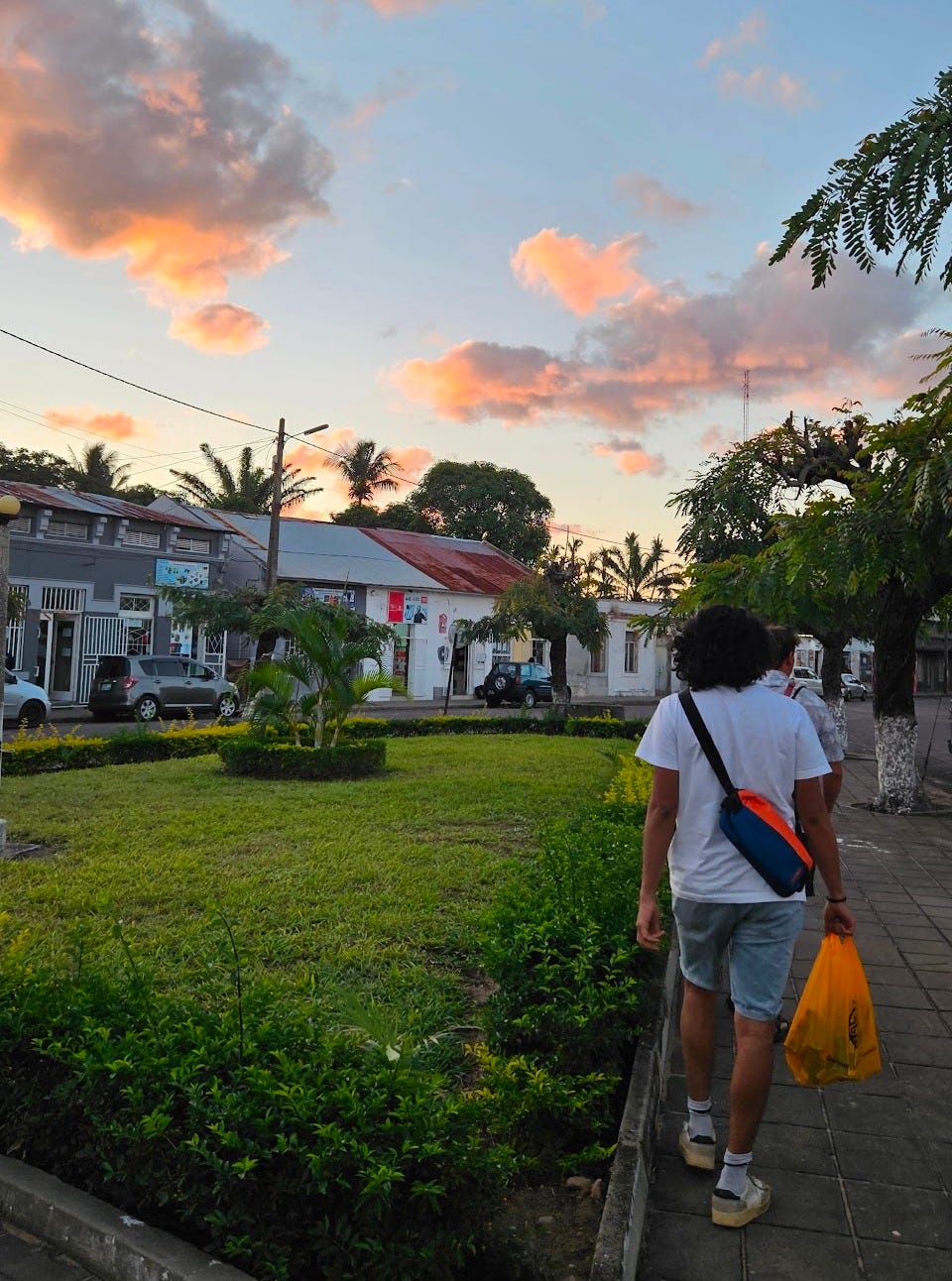
Once in Tofo, you can walk everywhere as the village is quite compact. To get to Inhambane or other spots around the area such as the more upscale Barra beach, you can arrange a taxi, but a chapa works perfectly fine too.
what else to know
Besides what you can find at the market (typically fruits, vegetables, fish, and seafood) and alcohol, grocery options are very limited in Tofo. The best way to get cooking ingredients is actually to get them delivered via YumYum.
There is no ATM in Tofo itself, and to get cash (which you will absolutely need), you have to go to the intersection between Tofo and Inhambane or Inhambane proper.
Nothing seems to have a fixed price for some reason. People will make you haggle over a coconut on the beach. It can get a bit exhausting, so be prepared.
You will sadly see loads of wealth inequality in Tofo. The place was basically built up by wealthy South Africans constructing their vacation homes here, and many of the businesses I shout out above are foreign-owned, too. I would urge you to support local whenever you can, be it the market, the fishermen, the few locally owned restaurants, the different tours and activities you can do, and perhaps even a charity like Mozambikes.
Coming in the winter (June) was actually the right call. Days were hot and sunny with very little rain, while the nights allowed things to cool down; no AC needed.
Tofo is generally safe, and I have met some women traveling there solo. Personally though, I probably wouldn’t do it.
In case you missed the last niche bucketlist edition, check it out ⬇️

Thanks for reading! If you enjoyed reading this post, here are a few things you can do to support me & my work. Give the post a like ❤️ , share ↪️ it with a friend or on your social media, or buy me a matcha 🍵 to keep the newsletter going.
You can also subscribe for free to my essays about ethical travel & online travel culture. Or become a paid subscriber and have access to the full range of unpacked content.
Appreciate your support xx
Tofo has been on my radar as well! Almost booked it for this October but I think I'll wait until next year. It souds like it's excatly like I imagined it!